The Events of 11/11

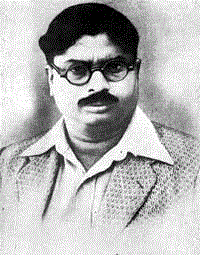
No matter how one reads 11/11, it turns out to be November 11th. The year is 1938 and the date now completely specified, refers to the date that N G Majumdar was killed by dacoits. And thus, this is a add-on to my last piece, “A Late Requiem for Nani Gopal Majumdar” and the events are revisited at the request of Professor Aziz Kingrani, who raised several questions regarding the gruesome events. There are two sources of information that I have access to at the moment, the volume of essays that I have referred to as the Explorations volume in my previous piece and to the scrapbook maintained by a very young Tapas Majumdar on the loss of his father. Unfortunately, the scrapbook is currently in very bad state and I need to get them digitalized.

Reporting on events of the past is difficult to say the least; what emerges, is quite bewildering. There are two parties, of course, like in any conflict, the victims and the perpetrators or perps, as you must have heard in many films. First the victims and this account is entirely from Krishna Deva’s account in the Explorations volume; he was after all an eyewitness to the incident.

I do not talk about the pandemonium that reigned while the dacoits opened fire, nor about NGM’s stepping out to ask them to stop and being shot down, the bandits swarming down and members of the team coming out of the their tents  and saving their lives by claiming that they were muslims and following their peon in reciting the Kalma. They left after confiscating some money and they kept asking for weapons and khazane that had been dug up.  After the perps left with their loot, the members of the team were without transport; the camels had been taken; there was a badly injured person (Mr Chatterjee) and the dead body of NGM. The survey team decided to leave the cursed spot and head for the Gaj Nai Canal Bungalow which was about 5 miles away. The camel drivers who were without a job were cajoled into carrying stuff for the team.

Before they had gone a mile, they met an armed convoy on camels led by a British SP who were apparently in hot pursuit of the dacoits; why they were there so quickly will be explained below. But this was the first encounter of the survey team with officialdom and their first report about the events. The SP advised them to proceed to the Bungalow as planned and to contact the Collector and Civil Surgeon. And the armed convoy left in hot pursuit! No help was provided by way of giving them a camel or two. Anyway, the team carried on and reached the Bungalow where they made the phne calls as advised by the SP; the Deputy Collector and Assistant Civil Surgeon turned up and escorted the party to the Civil Hospital. Consultations with Provincial Government and Central Government, the Director General of Archaeology in Delhi and also the Majumdar family were carried out at this stage. Although who among the Majumdar family were consulted is not very clear. The immediate family were not in a position to say anything coherent; the father-in-law of N G Majumdar was still in Sylhet; in Calcutta the brother-in-law, Mr H. Banerjee ICS ( he was married to Mrs Majumdar’s younger sister ) seems to be the most likely person. I cannot be sure since none of these persons are around any longer. But after all these consultations, it was decided to cremate Mr N G Majumdar according to Hindu rites in Dadu itself; and the cremation was carried out under the supervision of the Collector, Dadu on the afternoon of November 12!

On the 13th of November it is reported that Mr Chatterjee lost an arm: it was amputated. On the 14th the team left carrying MGM’s ashes. In another report, when the ashes were handed over to the Director General, he broke down. This is all that I could gather from the sources available to me. I have to say that even today when there is WhatsApp, Facebook and Internet things could not have moved faster. How did they manage?

So far as the perps are concerned, it was reported that they were reconnoitering the area for two or three days. Apparently, they came and talked to the camel drivers and the helpers who were accompanying the survey team. So they were told that the team was made up of Bengali Hindus and that they were digging for khazane or treasures. If they knew the team was made up of Hindus, why did they not object when they started saying that they were Muslims and followed the peon in reciting the prayers?  So there is some conflict.

But on 10th November in the evening, the perps came upon a village and in the village they ransacked the house of a rich businessman, a Hndu,  and killed one person besides looting a large amount of cash,  and were returning via a route which took them over the survey team’s encampment. And on the morning of 11th they attacked Mr Majumdar and party.  The perps left with the loot and hurriedly crossed over into Kalat State which was not under British jurisdiction. The armed convoy in hot pursuit led by the British SP were a couple of hours late and in any case, they were after the perps because they had killed the businessman the previous night.

The Kalat State provided assurances that they will hand over the perps after catching them and by mid December had, in an encounter, managed to kill the leader of the gang and capture six. And the authorities were confident of being able to capture the remaining members. Extradition proceedings were put in position and by the end of December, there is a report that the perps would be handed over to the British authorities and that trial would take place before the ‘huzur mukhtiarkar’ at Dadu. I presume this trial took place early in 1939. I have no further records except whatever I have heard from my uncle. If memory serves me right, the perps were sentenced to rigorous imprisonment for life. Once I recall my uncle saying wistfully, while we were discussing the events, that by now the dacoits must be leading a free life because after 14 years or so, one may be released.

Within 6 months surely, things had been cleared; the chief perp shot dead, others behind bars. The state had every reason to feel greatly self-congratulatory.  But what of the family of NGM ? And what too of Mr Chatterjee who lost an arm?  Well, the State cannot look after everything, can it? But was Justice done?

Nani Gopal Majumdar: A Late Requiem

Archaeology Excavation: Archaeological and historical pursuits in India
nani gopal majumdar

couple of days ago, I found out that there was a N G Majumdar Memorial Point on the banks of Nai Gaj in the Dadu district in Sind, Pakistan; not only that, there was a N G Majumdar Memorial Café by its side. The Google Maps coordinates of these points were also sent:

N G Majumdar Memorial Point

 https://maps.app.goo.gl/1SFM4dWm7abVqzUQ9

N G Majumdar Memorial Point Café

https://maps.app.goo.gl/xNR17MJUURsnufpJ8

How did this happen? What we can gather is that, about ten years ago, on January 16, 2011, the newspaper Dawn carried the following  report:

A ceremony was held on Sunday to pay tribute to renowned archaeologist Nani Gopal Majumdar at Rohel Ji Kund where he had been killed by a robber while he was doing excavation work in the Kachho area on Nov 11, 1938. A plaque was installed at the place.

On January 17, 2011, there was a further report/letter which read as follows referring to the previous day’s ceremony:

On Jan 16 Kacho Exploration, Anees Academy and Sujag Sansar, Johi, remembered him after 73 years by inscribing words of gratitude on the signboard.

These words are: ‘Sindh would remember you for centuries, and your work would be a guiding principle for those who are interested in archaeology of Sindh’.

The board is erected, where he was murdered.

This initiative by some individuals invites Sindh University, Jamshoro, and Shah Abdul Latif University, Khairpur Mirs, and Karachi Univerity to award posthumous honorary degree of doctorate in literature to N.G. Majumdar, who is still a source of inspiration for explorers, especially who are interested in archaeology.

Slightly before these reports appeared, Professor Dipankar Dasgupta had written an eulogy about his teacher Tapas Majumdar in the Telegraph (Kolkata, October 19, 2010) wherein among other things, he had mentioned the fact that Tapas Majumdar was the son of the famous archaeologist Nani Gopal Majumdar.  This was picked up by the Sindhi scholar Professor Aziz Kingrani, who wrote to Professor Dasgupta asking for the details re Nani Gopal Majumdar and Professor Dipankar Dasgupta put him in touch with me. I should perhaps clarify that I am the son of Nani Gopal Majumdar’s older daughter. While we were grieving for Professor Tapas Majumdar, we put together details re Nani Gopal Majumdar and sent it across. Presumably these details were used by Professor Kingrani in his letter in the Dawn on January 31, 2011 where he first corrected the biographical inaccuracies which had crept into the earlier  Dawn reports and made the further clear suggestion:

 “It is suggested that the department of archaeology and the government of Sindh should build a cenotaph at the place where he was assassinated to pay tribute to the archaeologist from Bengal”.

Recently I had written to Professor Kingrani, with an enquiry whether the cenotaph had indeed been set up. After all, many such suggestions are often made, but not many get carried out. Imagine our surprise when we learnt what had been done together with their position on Google Maps!

While we were wondering how come now? And many asked me how I came to know about this, since there had been no other communication, I thought I would explain the above in brief.  Some of us also felt that we should take this opportunity to acquaint people of the recent events in Sind and also describe and appreciate the accomplishments of Nani Gopal Majumdar (NGM).

First of all, and this is crucial for an understanding of what took place in 1938, when NGM was killed, he was yet to complete 41. He was killed on 11/11/38; he would have been 41 on 1/12/38, just a few days later. We have a post-card, written to his father-in-law, a Professor of Sanskrit in a Government College in Sylhet; the letter written in a great hurry saying all is well, is like countless letters written by people to their father-in-law; and he said he would be back by December 24!  The letter is dated 7/11/38 and that is the last mail from Nani Gopal Majumdar that we know of.

Apparently while engrossed with his work with his team, what they did not know, was that enquiries were being made about them (Statesman, Amrita Bazaar Patrika 18/11/38) from their camel drivers and porters; one of the news reports says that the latter could not pronounce the word archaeology and answered that it was a treasury department set of people; it was also reported that the people made queries about khazane (treasures) that had been dug out.  The firing into the camp started in the morning of 11/11/38; some people of the group got bullet injuries; NGM rushed out, saying that these persons are mistaken and to tell the bandits to stop and was immediately hit. His colleagues were more circumspect, staying inside the tents; they came out when the bandits came down from the hills and surrounded the tents. By then, NGM had breathed his last; his colleagues masqueraded being ‘Mussalmans’ by reciting the Kalma which a loyal peon recited at the top of his voice allowing others to follow, and so saved their skins. The bandits looted the tents, captured the five camels and left. The chilling details of this event are from Krishan Deva’s piece “My Last few hours with N G Majumdar” in the Explorations In Art and Archaeology of South Asia, Essays Dedicated to N. G. Majumdar, Editor Debala Mitra  (Explorations volume, hereafter).

Among the survivors of the attack, was Krishna Deva, who was to be later elevated to the rank of Director of Archaeology, who by his own account had been training under N. G. Majumdar.  What is clear is that no one came  to NGM in his hour of need. Maybe their own lives were at stake, and should be forgiven.

There was talk of the huge loss to Bengal’s archaeology immediately after the murder; important people held conferences at various prestigious places. The Calcutta Museum was closed for a day as a mark of respect. The dacoits were ultimately caught, 11 of them and in court said they did not know that it was the tent of a learned person. One account said that the owner of two of the camels which were captured, with a Koran in hand, tracked down the bandits and got back his two camels which were essential for his livelihood. What happened to the remaining three camels is unclear.

There was a report of Government being held responsible for this tragic loss; even that there should have been guards provided. There was mention that compensation was being carefully considered. My grandmother was clear, she considered the Government of the time guilty, and in anger and distress she said that she did not want to touch the compensation provided: Rs 100 per child and Rs 600 for herself. This is the best recollection that NGM’s daughter-in-law has of the amounts; she was told these details by her mother-in-law, my grandmother. How can these amounts compensate for the loss of the bread winner? My grandmother’s parents were fortunately, still quite active and took on the caretaking of the family; her mother Kiran Bala was a tough lady, ready for whatever challenge that came her way. The first thing she insisted was that my grandmother resume her studies; at the time she was widowed, she was just a matriculate, some one who had just finished school. She began studying once more and she and her daughter, my mother, graduated the same year together.

What needs to be noted is not only the amount of work that he accomplished but also its quality and impact. Professor Gregory Possehl of the University of Pennsylvania, wrote in the Explorations volume,  “N. G. Majumdar was one of the great archaeologists to have been a part of the early history of research on the Indus Civilisation. His excavations at Jhukar, Amri, Chanhu-daro and many other places were seminal contributions to the understanding of the culture history of early Sind. …”. A more explicit appreciation of the quality of NGM’s work is made by Professor Louis Flam of the Department of Anthropology, Lehman College, CUNY, New York. Writing in the Explorations volume too, he points out that NGM had been involved in excavation in Mohenjodaro since 1925 and in “1927-28 received a small grant to excavate at the site of Jhukar which was only 27 km (as the crow flies)  from Mohenjodaro”. Here NGM established evidence of not only the same culture as found in Mohenjodaro, the so called ‘Indus culture’ but also a late Indus culture, which Majumdar called the ‘Jhukar culture’; Majumdar applied for a grant to excavate the Indus River floodplain level of the Sindh. Encouraged by the success of his proposal, by 1930, Majumdar had discovered the sites of Amri, Chanhu daro and others. The discovery of Amri was his holy grail that he had sought tirelessly, and his son, describes his evident satisfaction in the Explorations volume. For Amri commeted Professor Flam, “revealed an occupation which was pre-Indus occupation which Majumdar called the Amri Culture”. The choice of which place to dig, according to those involved in excavation work, was made very difficult first because there were so many mounds in the sandy plains and secondly there was hardly any technology to see what lay beneath.  It could only be done by systematic analysis of data and correct inference therefrom. Still there were many days that NGM did not find anything at all.  One must also read the appreciation of Krishna Deva who, in an essay in the Explorations Volume, describes how he learnt from NGM how to go about searching for the past. Krishna Deva writes “ Majumdar thus presented as comprehensive a picture of Chalcolithic Sind as was possible with the evidence he collected and interpreted, certainly with keen observation and a highly analytical mind. He realised the far-reaching implications of his discovery of Amri and its bearing on the wider question of the relationship between Chalcolithic cultures of Iran, Seistan, Baluchistan and the Indus Valley”. He goes on to quote extensively from Majumdar’s Explorations in Sind to support the above. In a rather poignant passage, Krishna Deva noted that “Majumdar resumed his Explorations in Sind after a gap of 7 years in 1938 and surveyed the foothills of the Kirthar Range…That he exercised great forethought in planning his survey is indicated by the fact that he discovered in a short space of three weeks some half a dozen Chalcolithic sites including the site of Rohel-jo-kund where he was killed…”.

A complete listing of the publications of NGM (due to Mallar Mitra in the Explorations volume)  is made up of 5 books and several articles Among the five books the most well known are the Inscriptions of Bengal Volume III (Volumes I and II were yet to be written) and the Explorations in Sind, Being a Report on the exploratory survey carried out in the Sind during 1927-28,1929-30 and 1930-31, Memoirs of Archaeological Survey of India No 48 and the two part Guide to the Sculptures in the Indian Museum. There are some 65 items listed in the section on Articles, divided into several sections:

  1. Archaeology: Excavation, Exploration and Conservation
  2. Epigraphy
  3. Numismatics
  4. Art and Iconography
  5. Museum Notes and the usual residual,
  6. Miscellaneous

Each of the above section has multiple entries. In any full working life, the above would be the sign of an outstanding scholar; for someone whose life was choked off so early, this is a stupendous record, unlikely to be matched.

The scholars in Sind woke up 73 years after the death of NGM to acknowledge the contribution of this colossus; in India, we have only one volume, the Explorations, mentioned above, to acknowledge the significance of his work. Is this anywhere near adequate, you think?

Mistakes or Creating Opportunities

THE FIRST

My school days were 1951-1960, we had 10 years of schooling, which always led my son to complain how lucky we were since they had twelve years of schooling. In school, I was not quite bothered with examinations; my parents were of course worried at my lack of brilliance but eventually adjusted to my performance being comfortably mediocre; in a class of about 40, my position in class was around the 7th or 8th. My father started to joke about it and I too happily settled down. Once in 1956, to my complete amazement I stood 5th. I could not repeat the stellar performance again.

But 1956 was a difficult year in school; in our school till Class 6 there used to be two batches, so that classes were 6A or 6B but from 7 there was only a single section. So there used to be a selection which would be drastic. I had no worries on that score; in fact I started showing some skills in Arithmetic. Mr. Tarafdar used to teach us the subject and he was really skilled once a month, he would come into class and immediately set two or three questions and admonish us: Beware of traps and would borrow a sheet of paper from us solve the questions at lightning speed, while we would poke around looking for traps. At the end of the class we would submit the papers and after a day or two we would get the papers marked out of 10 and in red, marking the mistakes. Once, and this is actually my friend Deb’s story, who remembers it clearly, Mr Tarafdar cam to class with the corrected papers and held back our papers. In his loud voice, he called us to approach him, with the query “Who cheated from whom”?; it appeared that we had scored full marks each. But we used to sit at two extreme corners away from each other. We protested how could we have cheated, when we noticed a gleam in his eyes. He had cracked a joke. Deb tells us this story with great gusto every time we meet; he does not recall too many events from the past but it is funny so in deference to Deb, who is my closest friend in school and I thought perhaps the brightest in our batch and still perks up when we meet, I thought of including this item.

Our class years were evenly placed; Class 1 was in 51, class 2 in 52 and so on and then Class 10, when we appeared for the Senior Cambridge Examinations, was in 1960. Prior to that in 1959, we encountered the toughest looking Jesuit, Rev Father James W Cox SJ who took charge of us, taught us English and basically, provided us with guidelines which have stood us in good stead in later life. We respected him and kept in touch with him through our lives and whenever we met him, it always felt great. How an American would settle down in Patna and look after batches of boys each year training them for life is difficult to comprehend. When Father Cox stopped teaching, some people had thought that he would probably return to the US; he did actually but could not stay and returned in a short while and became an Indian citizen. Our class mate, Vinay Jha, who was then an IAS officer in the Ministry of Home Affairs organized Fr Cox’s pledge of allegiance to the country; if only Vinay had informed me, I would have gone to listen to Fr Cox pledging his allegiance in Hindi. He was a great man. I recall vividly that day in late 1960, just before we stopped attending classes and preparing for the December examinations, the lecture when Fr Cox provided us with an evaluation of our batch. He would march up and down while speaking when he asked ” So did you meet my expectations?” And he answered it in his usual stern manner, “NO!”. There was shocked silence in the class, we had our heads down when he began speaking again ” You exceeded them” and of course there was boisterous laughter all around. Fr Cox could be seen grinning away. Together with the Principal of our time, Father Gordon E Murphy, they made a very balanced team. When they passed away, the funeral processions were enormous and showed the affection of many people in Patna for these two Jesuits. Extraordinary school teachers and my first stroke of luck was having gone to that school for my education. I should devote another piece perhaps to the school.

In 1959, we had to choose our subjects for the Senior Cambridge. Somehow I did not like Biology, although we had a great teacher in the subject. And I was sure that I would not like to be a doctor. Nor was I going to be an engineer and I did not try for the entrance examinations to the IIT. I wanted to study aeronautical engineering I had bragged to a younger student and for that I needed to study Physics seriously. But Reality was grinning and waiting to pounce on me. I had chosen to take Religious Knowledge: Father Murphy tried to dissuade me from taking that subject. But I was pretty good with the Scriptures and of course there was Additional Mathematics. But the Senior Cambridge Examinations Results were somewhat quite unexpected. Results would take a long time to be announced since papers had to travel abroad, graded and so on. However, thinking back, given the logistics of the period, they did a damn good job. Our examinations were over in December 1960 while our corresponding batch who were writing the, say the Secondary Board Examinations in their Class 11 (no mistake, then they took the school leaving exams in Class 11) only in February/ March 1961 and their results would appear in May or June and we would join them for College in July. So there was a gap of about 6months or so when we had nothing to do specially those of us who were not writing the entrance examinations for IIT or Pre medical; those guys had a tough time. Around then, we found out from School that St. Xavier’s College in Calcutta were running a bridge course for four months for a modest fee. And my parents immediately sent me off to join. I was actually leaving Patna for the first time and would never return except for brief visits. I was not even 16, when I was put into Toofan Express by myself, with a steel trunk; I sat on the trunk almost the whole journey from Patna to Calcutta some eight or nine hours. I was to stay in Dover Lane with my maternal grandmother. I was sure that I could travel from Howrah station by myself to Dover Lane. And so I did.

Was this my First Mistake or was it an opportunity ?

Even now some sixty years later, I still cannot say what it was. Still it was momentous moving from Patna to Calcutta. I remember I was excited moving to Calcutta. First was the sense of independence; although I would be staying with my grandmother, I would be going to college, possibilities were endless. Having reached home, the next day I travelled to St Xavier’s College on Park Street which also had some of the most exciting restaurants. I remember meeting the Vice Principal Fr de Bon-homme who immediately admitted me and packed me off to class. I was to attend classes in Maths, Physics and Chemistry daily. The classes were fun, I remember running into Fr Goreaux. Extraordinary person. Maybe this was an opportunity after all.

Professional Matters

Brief Resume

Currently, Professor Emeritus at the Centre for Economic Studies and Planning (CESP) in Jawaharlal Nehru University (JNU). Taught at JNU from 1973 and retired as the RBI Professor of Economic Theory at the CESP in 2010. In between, while on leave from JNU, I also taught at LSE, Cornell University, and the University of Tsukuba in Japan. After retirement from JNU, held the position of Country Director of the International Growth Centre (IGC) programme in Bihar from 2010 its inception, to March 31, 2017;  research has been recognized by Fellowships at the Institute of Social and Economic Research, Osaka University during 2002-3 and post-retirement from JNU, was the Jawaharlal Nehru National Fellow of the ICSSR, 2011-13. During 2011-17, was also Honorary Visiting Professor at the National Institute of Public Finance and Policy, New Delhi. In 2013, I was recognised as Professor Emeritus at JNU. Areas of interest and research are primarily in Economic Theory, with published papers in the fields of Economic Dynamics, General Equilibrium Analysis, Development Economics, Governance, and related topics.

Curriculum Vitae

Who am I

I was born July 31 1945 in Calcutta in the home of Nalini Mohan Shastry, my mother Dipty’s maternal grandfather. My mother had traveled to be with her mother at child-birth, a practice still largely prevalent. My maternal grandmother Snehalata was a widow, her husband Nani Gopal Majumdar had been killed several years earlier. As a result, Snehalata was largely under the care of her mother Kiranbala and father Nalini Mohan. Nalini Mohan was a Professor of Sanskrit, hence the title Shastry. So I came into existence at the home of Nalini Mohan Shastry 3/1 Dover Lane Calcutta 29. The times were uncertain and my father Achalendranath Mukherji was then Munsiff in Purulia and his father, Surendranath, was in Patna. Our ancestral house used to be on Bank Road, Patna. These persons will hopefully figure later in these accounts.

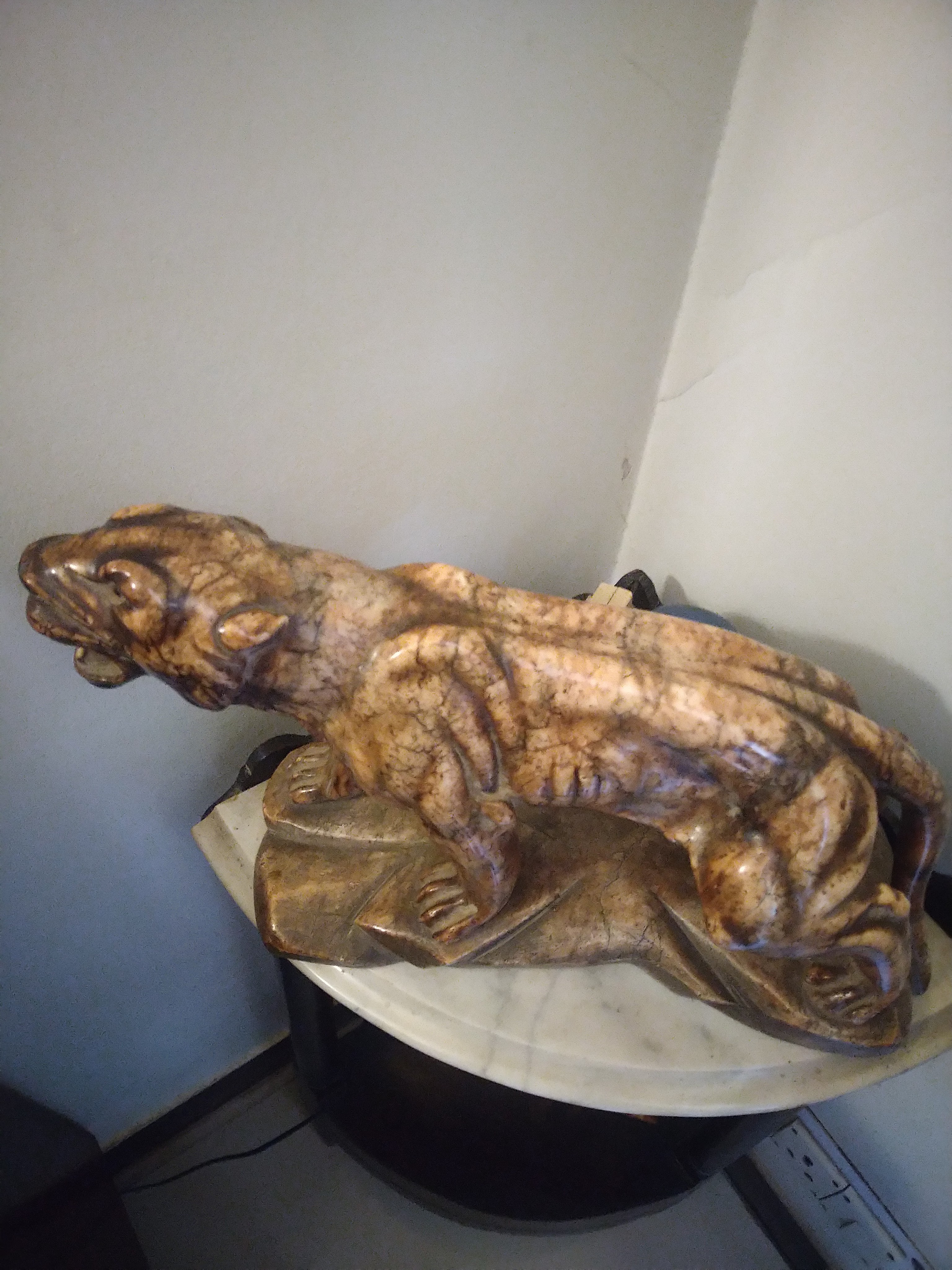
The tiger used to be located in Bank Road. Now it stays with me in our house located in National Media Centre Campus in Gurgaon. So how did the tiger land up here and what happened along the way is the principal story-line of these pages. In Bank Road the tiger was the stand for my grandfather, Surendranath’s, prayer beads, a Rudraksha Mala; the Rudraksha beads were big and my grandfather would pray twice a day. When time came for us to move away from Bank Road, I was surprised to notice that the beads were missing. So when I placed it in our current house, I got some rudraksha beads nowhere as magnificent as the ones my grandfather used, and placed it around the tiger’s neck. To get some dates in, the tiger remained in Bank Road till December 2019 and thereafter, was transported to Media Centre.

I would like to stress that the tiger stayed at my permanent residence always; which is why the intervening stays for reasonable lengths of time in Dover Lane (where I returned to go to College and my first job), then Kendrick Road in Rochester New York while pursuing a doctorate, or in 30 Dakshinapuram in JNU where I was to spend almost four decades, or at Truro Road in North London while I was teaching at the LSE or the NorthEast Apartments in Ithaca, NY while I was teaching at Cornell or the Matsushiro 5 apartment complex in Tsukuba near Tokyo in Japan or the I house in Osaka, the tiger never accompanied me. It stayed put in Bank Road, for that’s where it belonged. It shifted only when its habitat felt threatened. How that came to be, is something we shall talk about. So the subtitle indicates the two points where the tiger lived; I, on the other hand, had these two as my initial and end points; with a lot of intermediate points.

A family friend had told me that the tiger could be my pot of gold, a very famous piece. He had assumed that given its ancient look, it could be one of the famous Tipu Sultan Tigers commissioned by the Sultan. I have looked at some pictures and our tiger looks much more handsome and there isn’t any marking on it. I remember asking my grandfather where did he get the tiger from. And he said what a silly question, from the jungle of course. He had a sense of humour, we shall see examples of this but humour was not his defining characteristic.

Enough about the picture and the subtitle. Who am I? Even in the world of Google, there are several Anjan Mukherjis; some Anjan Mukherjees as well. The fist time I became aware of this non-uniqueness was when Barack Obama was elected President; that was in 2008 late November. His transition team was announced and there was Anjan Mukherjee in that team. The PTI office in Patna was familiar with the name for reasons that may be clear from what has been said so far; they were not familiar with the way I spelt my last name and in any case, people in India do not pay much attention to spellings. And PTI rang up a common acquaintance to check about the veracity of this report. He immediately called me up and complained: ” what is this you did not tell us that you are going to DC?”. It was fairly late that night and I asked him for clarification. He told me about Barack Obama’s transition team. I did tell him that some one who was going to be on the President Elect Obama’s transition team would have to be an American Citizen. He did not believe me and kept the phone down. I went back to doing whatever I was doing: we were still in Dakshinapuram JNU. The tiger was in Bank Road. Suddenly there was a call from some one who said he was from some press service, enquiring about whether I was accepting the assignment. I told him that look there must be some mistake and asked him to check the matter out. After I kept the phone down I realized that I need to check myself. So the net was switched on; sure enough there was a Anjan Mukherjee in the transition team; some one who had studied with Obama in high school and I felt relieved. Returning to the topic at hand, there are at least three Anjan Mukherji/Mukherjee in Google: a Mathematican who works with fuzzy concepts, a corporate type, an University Professor of Economics. And I am the last. 1951-60 was spent in school (St. Xavier’s) in Patna; 1961-69 in Calcutta (Kolkata, Presidency College); 1969-73 in the US obtaining a Ph.D., 1973-2010, primarily in JNU, New Delhi; 2010 onwards in Gurgaon, mainly except there were frequent trips to Patna for short stays during the first few years till 2019 when the tiger moved.

My students and friends may not be surprised by my beginning with existence and then worry about uniqueness in the above; but these are things which have concerned me for sometime. So far as Introduction goes, this should be adequate. More details will follow.

The Bank Road Tiger